 |  |  |
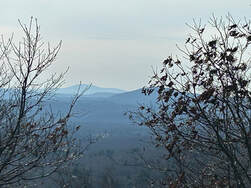
Conserved lands in the Northeast.
WHAT WE DID in Research for Environmental Agencies and Organizations Fall 2023 Dec 11 2:30 PM ROOM 132 Zoom link below
Accelerating the Clean Energy Transition by Empowering Women. Indrani Malhotra interviewed female experts in the renewable energy field.
Building A Tool for Forecasting Municipal Solid Waste Generation and Disposal Costs. Reilly DeMoura worked with Julie Kennie, a volunteer in Dennis, MA, to build a forecasting model for developing waste cost reduction strategies.
Educational Composting Program for Dennis Schools. Also working with Julie Kennie, Anusha Anand developed a plan for a composting in Dennis schools.
From Spectators to Stewards: local conservation and the campaign to save our backyards. Taylor Brokesh interviewed officials and conservation-minded individuals, and discovered several guiding concepts that people who care about preserving nature can use to promote more natural resource conservation.
Helping An Elementary School Alleviate the Urban Heat Island Problem. Studying the heat island effect led Katherine Chang to design cooling solutions for a vulnerable school she identified using heat maps and to contact the School Superintendent, who asked her to present her ideas so staff could hear them.
Accelerating the Clean Energy Transition by Empowering Women. Indrani Malhotra interviewed female experts in the renewable energy field.
Building A Tool for Forecasting Municipal Solid Waste Generation and Disposal Costs. Reilly DeMoura worked with Julie Kennie, a volunteer in Dennis, MA, to build a forecasting model for developing waste cost reduction strategies.
Educational Composting Program for Dennis Schools. Also working with Julie Kennie, Anusha Anand developed a plan for a composting in Dennis schools.
From Spectators to Stewards: local conservation and the campaign to save our backyards. Taylor Brokesh interviewed officials and conservation-minded individuals, and discovered several guiding concepts that people who care about preserving nature can use to promote more natural resource conservation.
Helping An Elementary School Alleviate the Urban Heat Island Problem. Studying the heat island effect led Katherine Chang to design cooling solutions for a vulnerable school she identified using heat maps and to contact the School Superintendent, who asked her to present her ideas so staff could hear them.
Defining Actions to Prevent Lead Poisoning as Key Indicators in the Accountable Care system. Bethany Quist investigated the potential for using the new accountable health care system to improve the response to the persistent problem of lead poisoning.
Examining Psychosociological Patterns of Climate Change Denial. Annabel Coplan delved into recent writings by psychoanalysts about the psychological mechanisms that prevent constructive action, finding a common thread of safe emotional awareness and acknowledgement as the first step in moving forward.
Helping advocates for the elimination of leaded aviation fuels. Ezra Berger worked with the course instructor and the nonprofit organization Quiet Communities to introduce provisions for the rapid elimination of leaded gas into current legislation to reauthorize the Federal Aviation Administration.
Green Cities for All. Genesis Munoz explored development strategies to create equitable, accessible, affordable, sustainable urban infrastructure and to articulate its importance.
Drafting a Brochure for a Town to Foster Collective Action for The Environment. Investigating conservation efforts in the Town of West Bridgewater, MA, Isabella Dias-Lam produced a draft informational brochure coined The Wildcat Green Chat to inspire greater community environmental consciousness and action.
The Roots of Resistance to Wind Turbines. Thomas Durand interviewed pro- and anti-wind power advocacy groups in Rhode Island, finding that organizations are distributing false information prompting public resistance, creating a need for efforts to counter the disinformation.
Redesign of a website seeking to raise consciousness about lead poisoning. Ericka Osses Aravena worked on improving the user experience of the educational platform leadconversation.net through new content organization, the use of color, and images of lead-containing items.
Designing an Innovative Sustainable Community App. Bradley Ellis also worked with Julie Kennie to design an app for the Town of Dennis that would provide information on where and how to best manage used materials and act sustainably in town.
How Towns Can Act on Invasives. Ethan (Yihong) Xiao interviewed officials and volunteers to produce recommendations for a town considering how to begin such an effort.
Building Bridges for Post-Oct 7 Coexistence. Noa Armoza investigated how the Arava Institute is adapting its strategies in the post-October 7 world. Through interviews she explored how partnerships formed through mutual efforts to solve environmental challenges can still providing opportunities for peaceful coexistence.
https://bostonu.zoom.us/j/97117587260?pwd=bUdEYlloZFdnSWFzZCs2NVBNM1VXZz09 Meeting ID: 971 1758 7260 Passcode: 433359
Examining Psychosociological Patterns of Climate Change Denial. Annabel Coplan delved into recent writings by psychoanalysts about the psychological mechanisms that prevent constructive action, finding a common thread of safe emotional awareness and acknowledgement as the first step in moving forward.
Helping advocates for the elimination of leaded aviation fuels. Ezra Berger worked with the course instructor and the nonprofit organization Quiet Communities to introduce provisions for the rapid elimination of leaded gas into current legislation to reauthorize the Federal Aviation Administration.
Green Cities for All. Genesis Munoz explored development strategies to create equitable, accessible, affordable, sustainable urban infrastructure and to articulate its importance.
Drafting a Brochure for a Town to Foster Collective Action for The Environment. Investigating conservation efforts in the Town of West Bridgewater, MA, Isabella Dias-Lam produced a draft informational brochure coined The Wildcat Green Chat to inspire greater community environmental consciousness and action.
The Roots of Resistance to Wind Turbines. Thomas Durand interviewed pro- and anti-wind power advocacy groups in Rhode Island, finding that organizations are distributing false information prompting public resistance, creating a need for efforts to counter the disinformation.
Redesign of a website seeking to raise consciousness about lead poisoning. Ericka Osses Aravena worked on improving the user experience of the educational platform leadconversation.net through new content organization, the use of color, and images of lead-containing items.
Designing an Innovative Sustainable Community App. Bradley Ellis also worked with Julie Kennie to design an app for the Town of Dennis that would provide information on where and how to best manage used materials and act sustainably in town.
How Towns Can Act on Invasives. Ethan (Yihong) Xiao interviewed officials and volunteers to produce recommendations for a town considering how to begin such an effort.
Building Bridges for Post-Oct 7 Coexistence. Noa Armoza investigated how the Arava Institute is adapting its strategies in the post-October 7 world. Through interviews she explored how partnerships formed through mutual efforts to solve environmental challenges can still providing opportunities for peaceful coexistence.
https://bostonu.zoom.us/j/97117587260?pwd=bUdEYlloZFdnSWFzZCs2NVBNM1VXZz09 Meeting ID: 971 1758 7260 Passcode: 433359
 RSS Feed